
Last updated: September 2026
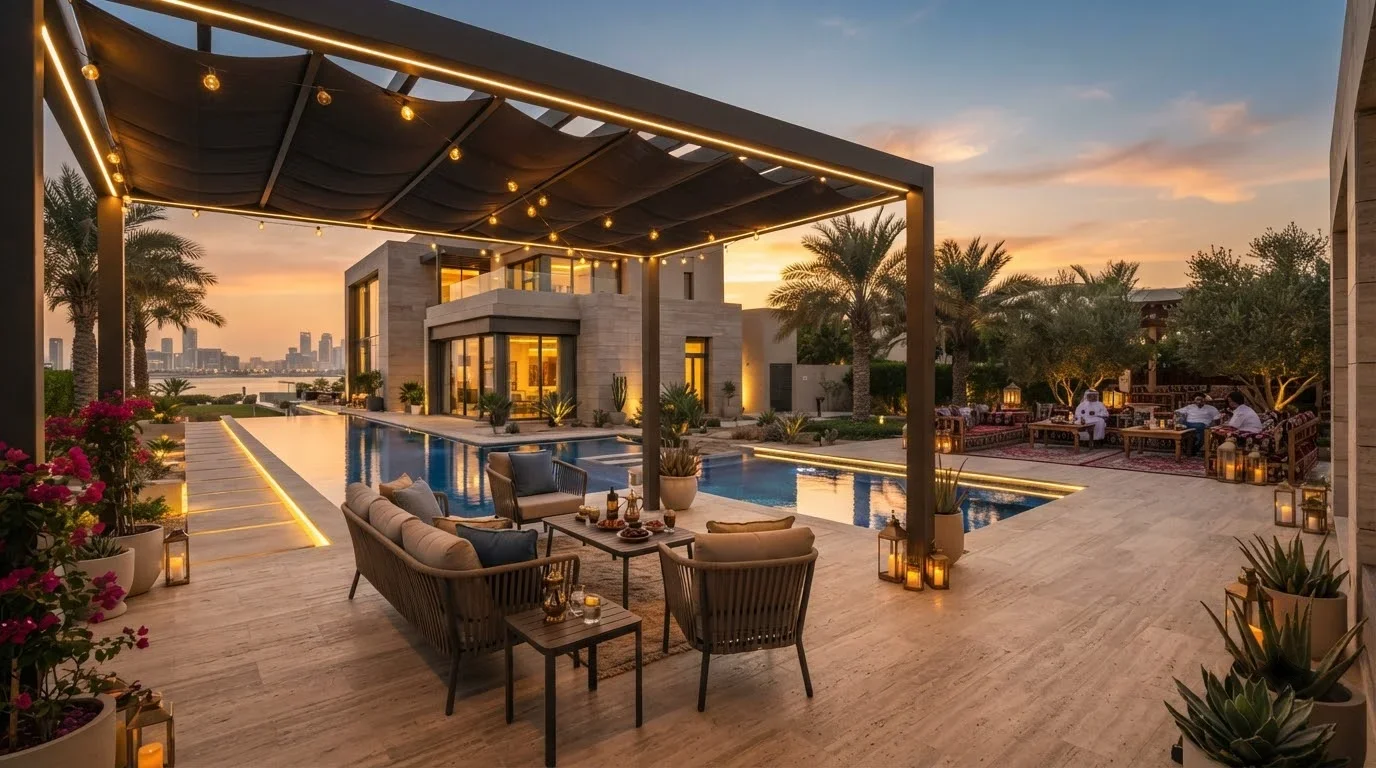
The UAE lifestyle has always balanced two worlds — the comfort of a climate-controlled interior and the timeless appeal of open-air gathering spaces. For decades, the majlis has served as the heart of Emirati hospitality, while modern villa terraces have become an extension of everyday living. Today, homeowners across Abu Dhabi, Dubai, and the wider Emirates are asking a more sophisticated question: how do you design outdoor and semi-outdoor spaces that feel luxurious, functional, and comfortable in one of the world’s most demanding climates?
This blog explores the principles behind successful indoor-outdoor villa design, the specific challenges the UAE climate presents, and how thoughtful architecture and material choices can turn a terrace or majlis into a year-round retreat rather than a space that only works for a few months.
Why Indoor-Outdoor Living Matters in the UAE
Indoor-outdoor living is not just an aesthetic trend — it is deeply rooted in regional culture and lifestyle. The majlis, a traditional gathering space for hosting guests and family, has always blurred the line between inside and outside. Villas built for modern Emirati and expatriate families now aim to recreate that same sense of openness, while incorporating contemporary comfort standards.
A well-designed terrace or majlis extends the usable footprint of a home. It creates a natural transition zone for entertaining, relaxing, and enjoying the outdoors during the cooler months, while still offering shelter and climate control when temperatures rise. Done well, these spaces increase both the livability and the resale value of a property.
The Climate Challenge: Designing for Heat, Humidity, and Sun
The UAE’s climate is one of the harshest environments for outdoor architecture anywhere in the world. Summer temperatures regularly exceed 45°C (National Centre of Meteorology), humidity along the coast can feel oppressive, and direct sunlight is intense for most of the year. Any outdoor or semi-outdoor space must be designed with these realities in mind from day one — not retrofitted later.
Key climate considerations include:
- Solar orientation – Positioning terraces and majlis structures to minimize direct afternoon sun exposure, often facing north or east where possible.
- Shading strategy – Layered shading using pergolas, retractable canopies, deep roof overhangs, and mashrabiya-inspired screens reduces heat gain significantly.
- Ventilation – Cross-ventilation design allows hot air to escape rather than settle, which is especially important for semi-enclosed majlis areas.
- Material selection – Light-colored, low-thermal-mass materials such as certain natural stones, treated timber, and specialized composite decking stay cooler underfoot than dark tiles or untreated concrete.
- Humidity management – Coastal properties need moisture-resistant finishes and proper drainage to avoid long-term damage to outdoor furniture, flooring, and structural elements.
Ignoring any of these factors typically results in outdoor spaces that look beautiful in renderings but sit unused for eight months of the year. This is where experienced design and construction teams add real value — translating aesthetic goals into climate-responsive solutions.
Designing the Modern Villa Terrace
A villa terrace today is expected to do more than simply provide outdoor seating. Homeowners want multifunctional spaces that can host dinner parties, family breakfasts, and quiet evenings alike, all while staying comfortable despite the outdoor temperature.
Cooling technology has become a standard feature rather than a luxury add-on. Outdoor misting systems, evaporative cooling units, and shaded ceiling fans can lower the perceived temperature on a terrace by several degrees, extending usable hours well into the warmer months. Retractable glass walls and sliding doors allow a terrace to transform from fully open to a semi-enclosed, air-conditioned extension of the living room within minutes.
Flooring and hardscaping choices matter enormously. Porcelain pavers engineered for UAE conditions resist fading, staining, and heat absorption far better than standard tiles. Natural stone, when properly sealed, offers a premium look but requires careful maintenance planning in high-humidity coastal zones.
Water and greenery play a functional as well as decorative role. Shallow reflecting pools, fountains, and strategically placed planting not only enhance the visual appeal of a terrace but also help moderate the immediate microclimate through evaporative cooling and shade.
Lighting design deserves equal attention. Warm, layered lighting extends the terrace’s usability into the evening — the most comfortable time of day for outdoor entertaining in the UAE for much of the year.
Reimagining the Majlis for Contemporary Living
The majlis remains one of the most culturally significant spaces in an Emirati home, and its design today reflects a careful balance between tradition and modern comfort. Contemporary majlis spaces often sit at the boundary between fully indoor and fully outdoor, functioning as a transitional zone that can be opened up or sealed off depending on the season and occasion.
Design considerations for a modern majlis include:
- Flexible enclosure systems – Sliding or folding glass panels allow the space to be fully open during pleasant winter evenings and fully enclosed with climate control during summer.
- Seating and layout – Traditional low seating arranged around the perimeter remains popular, but many contemporary majlis designs incorporate modular furniture for greater versatility.
- Acoustic and privacy considerations – Screens, latticework, and landscaping are used to create a sense of privacy without sacrificing airflow or natural light.
- Cultural detailing – Geometric patterns, traditional textiles, and locally inspired materials help maintain authenticity while integrating modern building performance standards.
A majlis that blends heritage design language with climate-smart engineering tends to be the most successful — visually distinctive while genuinely comfortable to use throughout the year.
Materials and Technology That Make the Difference
The success of any indoor-outdoor space in this region ultimately comes down to specification detail. High-performance glazing reduces solar heat gain without sacrificing views. UV-stable fabrics and cushions resist fading and degradation. Smart shading systems can be programmed to respond automatically to sun position and temperature throughout the day.
Integrating these systems seamlessly into a villa’s overall architecture requires coordination between architects, interior designers, MEP engineers, and the construction team from the earliest design stages. This is precisely why many homeowners undertaking luxury villa construction in Abu Dhabi choose to bring their design and build partners together early, rather than treating outdoor spaces as an afterthought once the main structure is complete.
Choosing the Right Team for the Job
Because terraces and majlis spaces sit at the intersection of architecture, engineering, and interior craftsmanship, they demand a level of coordination that not every contractor can deliver. Working with an experienced general contractor who understands both the technical demands of the UAE climate and the aesthetic expectations of high-end residential projects makes a measurable difference in the final result — from structural waterproofing details to the finish quality of a stone terrace edge.
For villa owners in Abu Dhabi, local climate expertise is particularly valuable. Coastal humidity, salt exposure, and intense summer sun create conditions that differ from inland developments, and a design team familiar with these nuances can avoid costly performance issues down the line.
Approvals and Costs for Terraces, Pergolas and Majlis Extensions
Enclosing a terrace, adding a covered majlis or building a permanent pergola often counts as a change to the villa’s built-up area or exterior, so it needs DMT approval through TAMM. In master-planned communities it also needs the developer’s NOC. Built extensions are priced like new construction; our renovation vs extension guide compares costs and permits. For outdoor surfaces and metalwork that last, see materials that survive Abu Dhabi summers.
Final Thoughts
Indoor-outdoor living in the UAE is not about choosing between beauty and practicality — it’s about achieving both through informed design decisions. A well-planned terrace or majlis becomes one of the most used, most loved spaces in the home, offering a genuine connection to the outdoors without compromising comfort.
Whether you are planning a new build or renovating an existing property, investing early in climate-responsive design, quality materials, and an experienced construction partner will pay dividends in how the space performs and feels for years to come.
Frequently Asked Question
1.What is the ideal material for a UAE villa terrace floor?
Light-colored, low-thermal-mass materials like treated porcelain pavers or sealed natural stone that stay cool underfoot.
2. Can a majlis be used year-round in the UAE?
Yes, with flexible glass enclosures and climate control, a majlis can function comfortably in every season.
3.How much can outdoor cooling systems reduce terrace temperature?
Misting and evaporative cooling systems can lower perceived temperature by several degrees, extending usable hours.
4.Why is solar orientation important in terrace design?
Proper orientation minimizes direct afternoon sun exposure, reducing heat gain and improving comfort.
5. Should outdoor design be planned with the main villa or added later?
It should be planned from the start alongside the main structure to ensure proper integration and performance.
6. What makes coastal villa design in Abu Dhabi different?
Higher humidity and salt exposure require moisture-resistant finishes and materials suited to coastal conditions.