
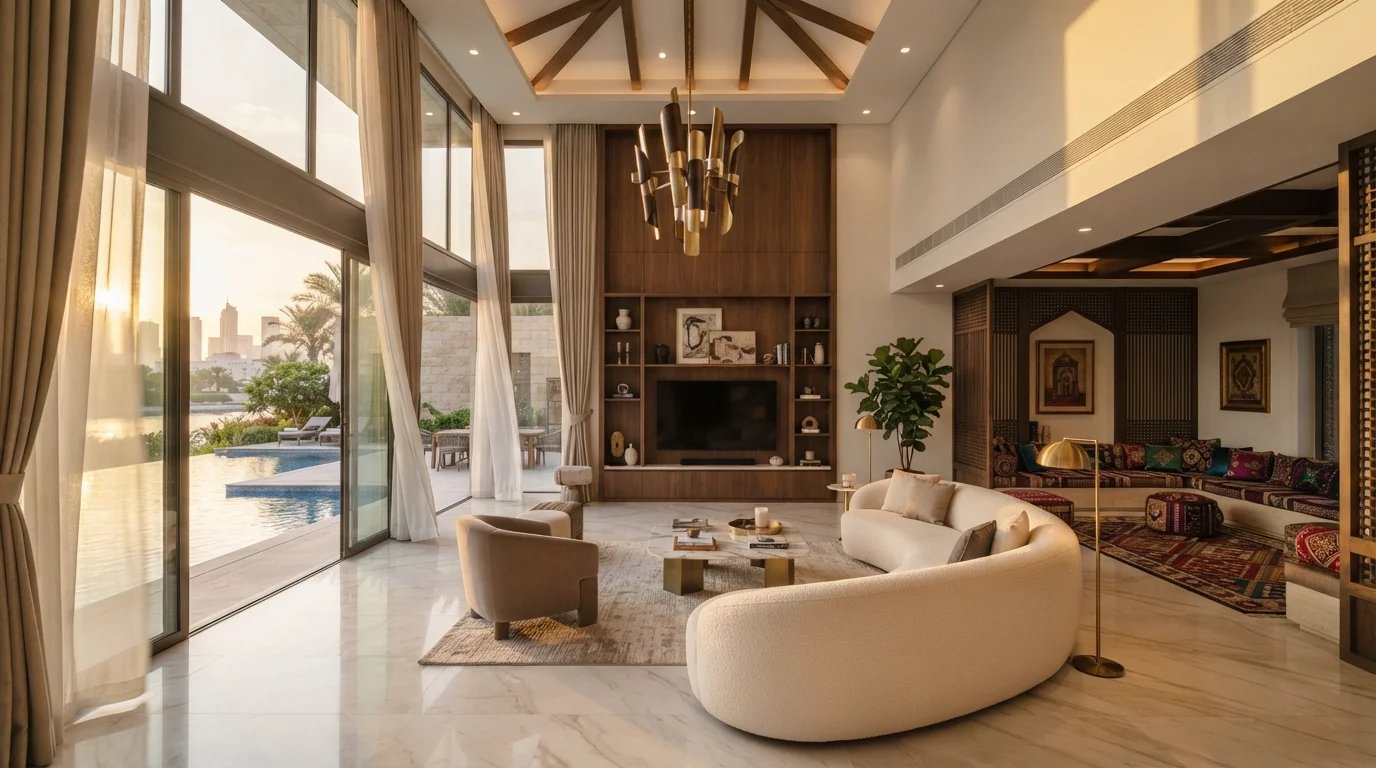
Last updated: September 2026
If you’ve spent any time around Abu Dhabi’s luxury villa market, you’ll know it’s not a place where shortcuts go unnoticed. Owners on Saadiyat Island, Al Reem, Yas Island, or in the older, quieter streets of Al Mushrif and Khalidiya tend to have exacting standards, and honestly, they’ve earned the right to. A private villa fit-out in Abu Dhabi isn’t just about picking beautiful materials — it’s a coordination exercise between design, engineering, procurement, and site teams, all of it shaped by the climate, the regulations, and the way families actually live here.
So what separates a fit-out that comes in on budget and looks stunning ten years later from one that drags on, blows past its numbers, and still feels underwhelming at handover? Here’s what we’ve seen work.
Design for the Climate and the Lifestyle, Not Just the Renderings
Abu Dhabi’s heat, humidity, and dust are unforgiving on materials and layouts that weren’t designed with them in mind. A good villa interior design brief in Abu Dhabi thinks through a few things early on, starting with summer heat and coastal humidity.
Thermal performance
Natural stone, timber, and metal all expand and contract differently once temperatures climb, so expansion joints and material specs need to reflect that — not be lifted straight from a European or Asian showroom catalogue.
Light management
Those dramatic floor-to-ceiling glass walls look incredible in a rendering, but without the right UV films, shading, or double glazing, a majlis can turn into a greenhouse by midday.
Indoor-outdoor flow
Most high-end villas here are built around courtyards, pools, and outdoor majlis areas, so flooring continuity, drainage, and weatherproofing between the two need to be treated as one design problem — not handed off to different trades that never quite line up.
Cultural and family layout needs
- Separate guest and family entrances
- Dedicated majlis and prayer spaces
- Privacy screening between public and private areas
These aren’t nice-to-haves — they’re often central to how the family actually wants to live, and they need to be locked in before a single contractor quote goes out.
Pick a Contractor Who’s Actually Done This Before
Not every contractor who’s good at fit-out is good at villa fit-out — the two aren’t the same skill set. When you’re shortlisting fit out contractors in Abu Dhabi, it’s worth digging past the portfolio photos and checking for:
- A genuine villa track record — not mostly commercial or hotel work, since the trades, tolerances, and client relationship are all different
- Strong MEP coordination — this is usually where things go wrong: the seam between architectural finishes and the electrical, plumbing, and HVAC behind them
- Experience with imported finishes — Italian marble, Southeast Asian joinery, European lighting — and a clear process for customs clearance and quality control before any of it reaches site
- Verifiable references — for a villa of similar scale and finish quality, completed in the last couple of years, not a project from a decade ago
Keep the Whole Scope Under One Roof
A lot of villa projects lose money and time simply because design, joinery, MEP, and finishes end up split across separate contracts with nobody clearly accountable when something goes wrong. It’s usually a stronger approach to bring in one of the established interior contracting companies in Abu Dhabi that can carry the whole scope — from base-build handover right through to furniture placement — under a single contract and a single project manager.
Why this matters
- One party owns coordination between trades, so you’re not refereeing disputes when snags show up at the interfaces
- Procurement gets sequenced properly instead of everyone ordering on their own timeline
- Cost control is easier when variations run through one commercial framework, rather than being negotiated separately with five or six subcontractors who each have their own agenda
Get Ahead of Lead Times Early
If there’s one thing that quietly wrecks villa fit-out schedules, it’s underestimating how long materials actually take to arrive. The best-run projects freeze design and place orders for the long-lead items within the first month or so.
Items to order early
- Natural stone and slabs — often 8–14 weeks from quarry to site
- Custom joinery and cabinetry — typically 10–16 weeks depending on complexity
- Imported sanitaryware and specialist lighting — lead times vary by supplier and origin
- Smart home, AV, and security infrastructure — needs coordination with the electrical first fix before walls close up, which means bringing systems integrators in at the design stage, not scrambling to retrofit later
Build Quality Control Into the Process, Not Just the Intent
Good finishes are only as reliable as the inspection process behind them. Contractors who take this seriously will typically build in:
- Mock-up rooms or sample walls for stone, paint, and joinery, signed off by the client before anything rolls out across the whole villa
- Milestone snagging — at first fix, second fix, and pre-handover — rather than one enormous list saved for the end
- Moisture and humidity testing before timber flooring or veneered joinery goes in, given how humid it gets along the coast here
- A clear defects liability period with a contractor who actually shows up when something needs fixing — this tells you a lot about how they’ll behave long after the final invoice is paid
Wire the Villa for Smart Home and Efficiency From the Start
Most owners in this bracket now expect integrated automation — lighting, climate, security, AV — along with some attention to energy efficiency, which matters given how much it costs to run a large villa here. Trying to add any of this after the finishes are done is far more disruptive and expensive than simply planning the containment and control points into the fit-out from day one.
Don’t Let the Project Drift — Keep Governance Tight
Even with a great design and a capable contractor, high-end villa projects can quietly slip without some discipline around how they’re managed.
What good governance looks like
- Weekly progress meetings with a fixed agenda covering programme, procurement, and any variations
- One clear change-control process, so scope changes get costed and approved before the work happens — not after the fact
- A realistic contingency of 10–15% of contract value, set aside specifically for the surprises that always seem to turn up once ceilings, floors, and walls are opened
What Does a High-End Villa Fit-Out Cost in Abu Dhabi?
Direct answer: luxury villa fit-outs typically cost AED 2,500–3,800 per m² (about AED 230–355 per sq ft), and bespoke, ultra-luxury interiors cost AED 4,000–6,500+ per m². A 400 m² luxury villa therefore costs roughly AED 1.0M–1.5M. Imported stone, bespoke joinery and full automation push projects toward the top of the range. For the full breakdown by size and specification, see our villa fit-out cost guide.
Approvals for High-End Fit-Outs
Layout changes, structural openings and MEP modifications need DMT approval through TAMM. Master-planned communities such as Saadiyat, Yas and Al Reem add their own developer rules and NOCs. A good fit-out contractor builds these approvals into the programme rather than leaving them to the owner. Before you sign, run through our fit-out contract checklist.
Related reading: 2026 interior design trends for luxury Abu Dhabi villas and villa terrace and majlis design for the UAE climate.
Final Thought
At the end of the day, a successful high-end villa fit-out in Abu Dhabi comes down to three things lining up: a design brief that genuinely fits the climate and how the family lives, a contractor with real villa experience and one point of accountability, and a procurement and quality-control process disciplined enough to protect both the budget and the finish. Owners who put in the time upfront on contractor selection and design sign-off tend to end up with smoother projects — and villas that still look as good as they did on handover day, years later.
Frequently Asked Questions
How long does a typical high-end villa fit-out take in Abu Dhabi?
About 6–8 months from design freeze to handover for a luxury villa with custom joinery, imported stone and smart-home integration, and up to 10 months for bespoke specifications with long-lead imports. Rushed procurement of long-lead items is the main cause of delay.
What's the difference between a fit-out contractor and an interior design firm?
The designer develops the concept, material palette and space plan. The fit-out contractor builds it: civil works, joinery, MEP and finishes. Some firms offer both under one contract, which helps close the gap between design intent and what gets built.
Is it better to hire one contractor for everything, or separate specialists?
For a villa, one accountable contractor is generally safer. Splitting joinery, MEP and finishes across several parties can look cheaper at first, but often costs more once coordination gaps, delays and disputes over defects are counted.
What budget range should owners expect for a luxury villa fit-out?
Typically AED 2,500–3,800 per m² (about AED 230–355 per sq ft) for luxury, and AED 4,000–6,500+ per m² for bespoke interiors. Ask for an itemised BOQ rather than a lump sum so you can compare contractors fairly.
Do fit-out works in Abu Dhabi need government approval?
Yes, generally. Structural changes, MEP modifications and some external works need DMT approval through TAMM, and communities such as Saadiyat, Yas and Al Reem have their own developer processes. A good contractor handles this as part of the scope.
How early should smart home and AV systems be planned?
At design stage, before the electrical first fix starts. Adding automation, security or AV after walls and ceilings are finished is far more disruptive and expensive.