
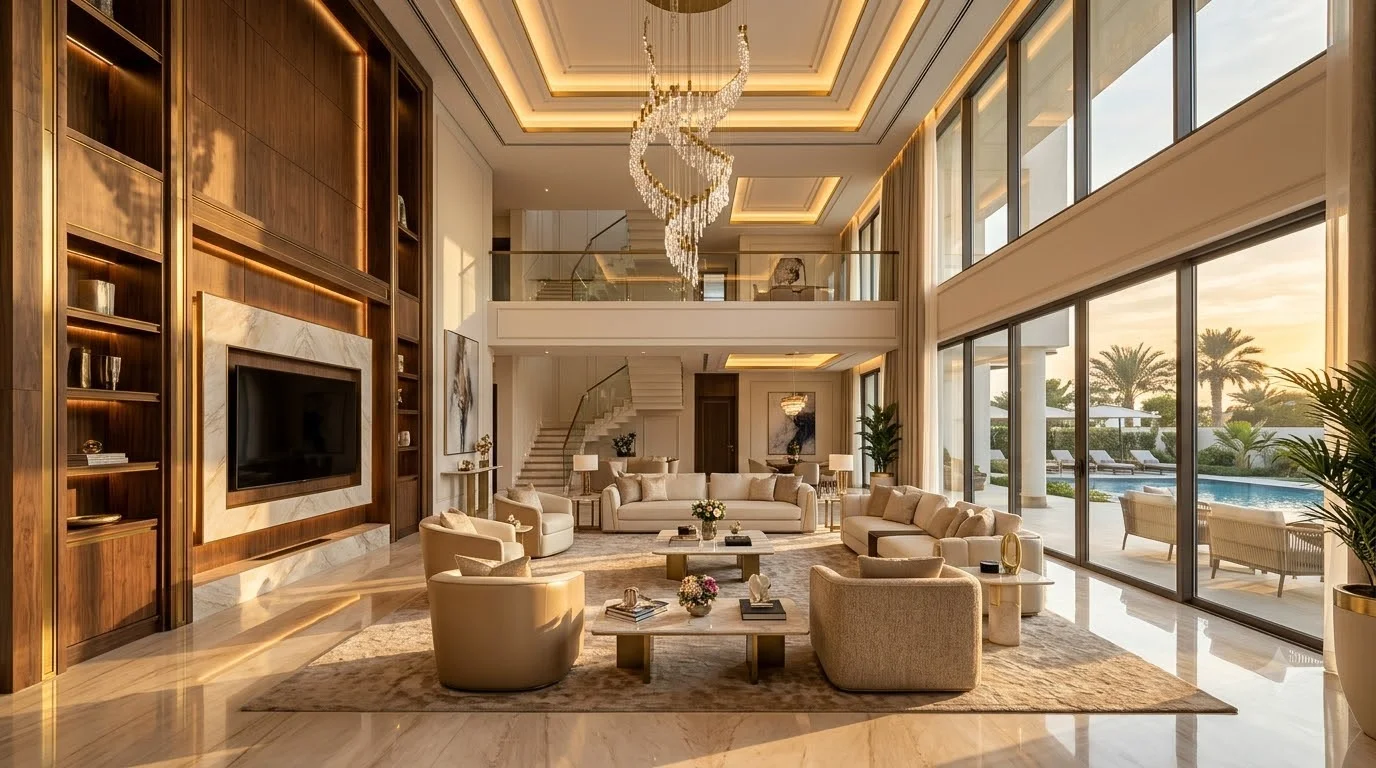
Abu Dhabi’s villas range from beachfront residences on Saadiyat Island to spacious family estates in Khalifa City and Al Raha. Whatever the location, a truly luxurious interior is more than expensive finishes. It comes from careful planning, precise craftsmanship, and seamless coordination between many trades. An experienced luxury villa interior contractor turns a design vision into a home that looks refined, works efficiently, and holds its value over time.
This guide covers the essential elements that define a well-designed luxury villa interior, so you know what to look for before starting your project.
1. Intelligent Spatial Planning
Every great interior starts with the floor plan. Luxury is often felt in the way a home moves: generous circulation, clear sightlines, and a natural separation between public and private areas.
Key planning principles include:
- Zoning: Formal reception areas (majlis, living, dining) are kept distinct from family spaces and bedrooms.
- Flow: Wide corridors, double-height entrances, and logical connections between the kitchen, dining, and outdoor terraces.
- Privacy: Separate access for guests, domestic staff, and service areas, which is especially important in Gulf households.
- Proportion: Ceiling heights, room dimensions, and furniture scale should feel balanced, never crowded or empty.
Whether you are building new or taking on villa remodeling Abu Dhabi projects that reconfigure an older layout, getting the plan right first prevents costly changes later.
2. Premium Materials and Finishes
Material selection sets the tone of the entire villa. Luxury interiors favor authentic, durable, and tactile materials over imitations.
- Natural stone: Italian marble, travertine, and onyx for floors, feature walls, and bathrooms.
- Fine timber: Walnut, oak, and ebony veneers for paneling, doors, and cabinetry.
- Metals: Brass, bronze, and brushed stainless steel for detailing, inlays, and fixtures.
- Textiles and wall coverings: Silk, suede, leather, and custom wallpapers for depth and warmth.
A skilled luxury villa interior contractor knows how these materials behave in the UAE climate. Humidity, heat, and sunlight can affect timber stability, stone sealing, and paint durability, so correct installation and treatment matter as much as the material itself.
3. Layered Lighting Design
Lighting can make or break a luxury space. Rather than relying on a single overhead source, well-designed villas use layers:
- Ambient lighting: Cove lights, recessed fixtures, and concealed LED strips for soft general illumination.
- Task lighting: Focused lights for kitchens, study areas, vanities, and reading corners.
- Accent lighting: Spotlights and wall washers that highlight artwork, textures, and architectural features.
- Decorative lighting: Statement chandeliers, pendants, and sculptural lamps that act as focal points.
Dimmable circuits and scene-based controls let owners shift from a bright daytime mood to a warm evening atmosphere with one touch.
4. Seamless MEP Integration
The most beautiful interior will disappoint if the systems behind the walls are poorly designed. Mechanical, electrical, and plumbing (MEP) works are the invisible backbone of a luxury villa. They determine comfort, safety, noise levels, and long-term running costs.
Important MEP considerations include:
- HVAC: Zoned cooling with quiet, energy-efficient units, concealed ducting, and proper fresh-air ventilation.
- Electrical: Sufficient load capacity, backup power provisions, clean cable management, and well-planned socket and switch positions.
- Plumbing: High-quality piping, water softeners, hot water systems, and leak-detection systems.
- Fire and life safety: Compliance with local civil defence requirements.
Hiring a qualified villa MEP contractor Abu Dhabi homeowners can rely on ensures these systems are coordinated with the interior design from day one. That avoids ugly ceiling bulkheads, misplaced vents, and last-minute wall demolition.
5. Bespoke Joinery and Custom Furniture
Off-the-shelf pieces rarely deliver the precision that luxury demands. Custom joinery lets every wardrobe, kitchen, media wall, and vanity fit its space perfectly while matching the overall design language.
Features that signal quality include:
- Walk-in wardrobes with integrated lighting, soft-close drawers, and display units
- Handleless or concealed-hardware cabinetry for clean lines
- Seamless grain matching across doors and panels
- Built-in storage that maximizes space without cluttering the room
Custom furniture, such as sofas, dining tables, and beds, can also be designed to match the villa’s proportions and the family’s lifestyle.
6. Smart Home Technology
Modern luxury is effortless. A smart home system quietly manages the villa’s functions, including lighting, curtains, climate, security, audio-visual systems, and access control.
A good installation is:
- Integrated: One platform controls all systems rather than several competing apps.
- Discreet: Keypads, sensors, and speakers blend into the design.
- Reliable: Proper cabling and network infrastructure installed during construction, not added later.
- Scalable: Ready for future upgrades without major rework.
Because smart systems depend on wiring and infrastructure planned early, they should be coordinated with the MEP and interior teams from the start.
7. Colour, Texture, and Detail
Luxury interiors rarely depend on bold color alone. Instead, they use restrained palettes and rich variation in texture. Neutral bases such as ivory, sand, taupe, and charcoal are layered with metallic accents, deep jewel tones, or natural greens.
Details create the sense of craftsmanship:
- Shadow gaps and fine skirting profiles
- Feature ceilings with coffers, trays, or decorative plasterwork
- Statement staircases with stone, glass, or metal balustrades
- Artwork, rugs, and accessories curated to complement rather than crowd
8. Climate-Conscious Design for Abu Dhabi
A villa in the UAE must perform in extreme heat and strong sunlight. Smart design choices make the home more comfortable and efficient:
- High-performance glazing to reduce heat gain while preserving views
- Good insulation and thermal detailing
- Shading elements, such as screens, pergolas, and deep overhangs
- Light-resistant fabrics and finishes that resist fading
- Seamless indoor-outdoor transitions with terraces, courtyards, and landscaped gardens
Professional contractors treat these factors as design drivers, not afterthoughts.
9. A Structured Fit-Out Process
Even the best design can fail without disciplined execution. A professional villa fit out Abu Dhabi project typically follows these stages:
- Concept and design development: Mood boards, layouts, and 3D visualizations.
- Technical drawings and approvals: Detailed plans, MEP coordination, and authority approvals.
- Procurement: Sourcing materials and furniture, often with long lead times for imported items.
- Construction and installation: Civil works, MEP, joinery, finishes, and lighting installation.
- Quality control and handover: Snagging, testing and commissioning, and documentation.
Clear milestones, transparent budgeting, and regular site reporting keep the project on schedule and free of surprises.
10. Renovation and Remodeling Considerations
Many owners choose to upgrade an existing property rather than start over. A high end villa renovation Abu Dhabi homeowners undertake can modernize outdated layouts, replace aging systems, and refresh finishes while preserving the property’s best features.
Common upgrade areas include:
- Kitchens and bathrooms with new layouts and premium fixtures
- Outdated MEP systems, including wiring, cooling, and plumbing
- Flooring, ceilings, and wall treatments
- Extensions, such as additional majlis spaces, home cinemas, or spa areas
Careful assessment of the existing structure and services is essential before any design decisions are made.
11. Choosing the Right Luxury Villa Interior Contractor
The contractor you choose strongly affects quality, timeline, and cost. When evaluating a luxury villa interior contractor, look for:
- Proven portfolio: Completed villa projects of comparable scale and quality.
- In-house capabilities: Joinery, MEP, and finishing teams under one roof for better coordination.
- Local expertise: Knowledge of Abu Dhabi regulations, approval processes, and climate challenges.
- Transparent costing: Detailed quotations with clear scopes and allowances.
- Quality assurance: Defined inspection procedures and a reliable defects-liability period.
- Communication: A dedicated project manager and regular progress updates.
For any high end villa renovation Abu Dhabi clients plan, these criteria help separate truly capable contractors from those who only look good on paper.
Final Thoughts
A well-designed luxury villa interior balances beauty, function, and longevity. It begins with thoughtful spatial planning and extends to premium materials, layered lighting, bespoke joinery, smart technology, and engineering that works invisibly in the background. Whether you are planning a complete villa fit out Abu Dhabi project, coordinating a villa MEP contractor Abu Dhabi specialists can deliver, or exploring villa remodeling Abu Dhabi options for an existing property, the same principles apply: plan carefully, choose quality, and work with professionals who understand both design and construction.
Frequently Asked Question
1. What makes a villa interior “luxury”?
Luxury comes from a combination of quality materials, custom craftsmanship, intelligent layout, layered lighting, and well-integrated systems. It is the overall quality and attention to detail, not just expensive items.
2. How long does a luxury villa fit-out usually take?
Timelines vary with size and complexity, but most full villa interior projects take between 6 and 12 months from design to handover. Imported materials and custom furniture can extend this.
3. Why is MEP planning so important in a luxury villa?
MEP systems affect comfort, safety, and energy efficiency. Early coordination with interior design prevents clashes, hidden-service problems, and expensive rework.
4. Should I renovate my existing villa or rebuild?
If the structure is sound, renovation is often faster and more cost-effective. A professional assessment of the structure and services will help you decide.
5. What should I check before hiring a luxury villa interior contractor?
Review their portfolio, licences, in-house capabilities, references, and the clarity of their quotation and project management process.
6. Can smart home technology be added after construction?
It can, but it is more disruptive and expensive. Planning cabling and infrastructure during the fit-out gives cleaner results and better reliability.