

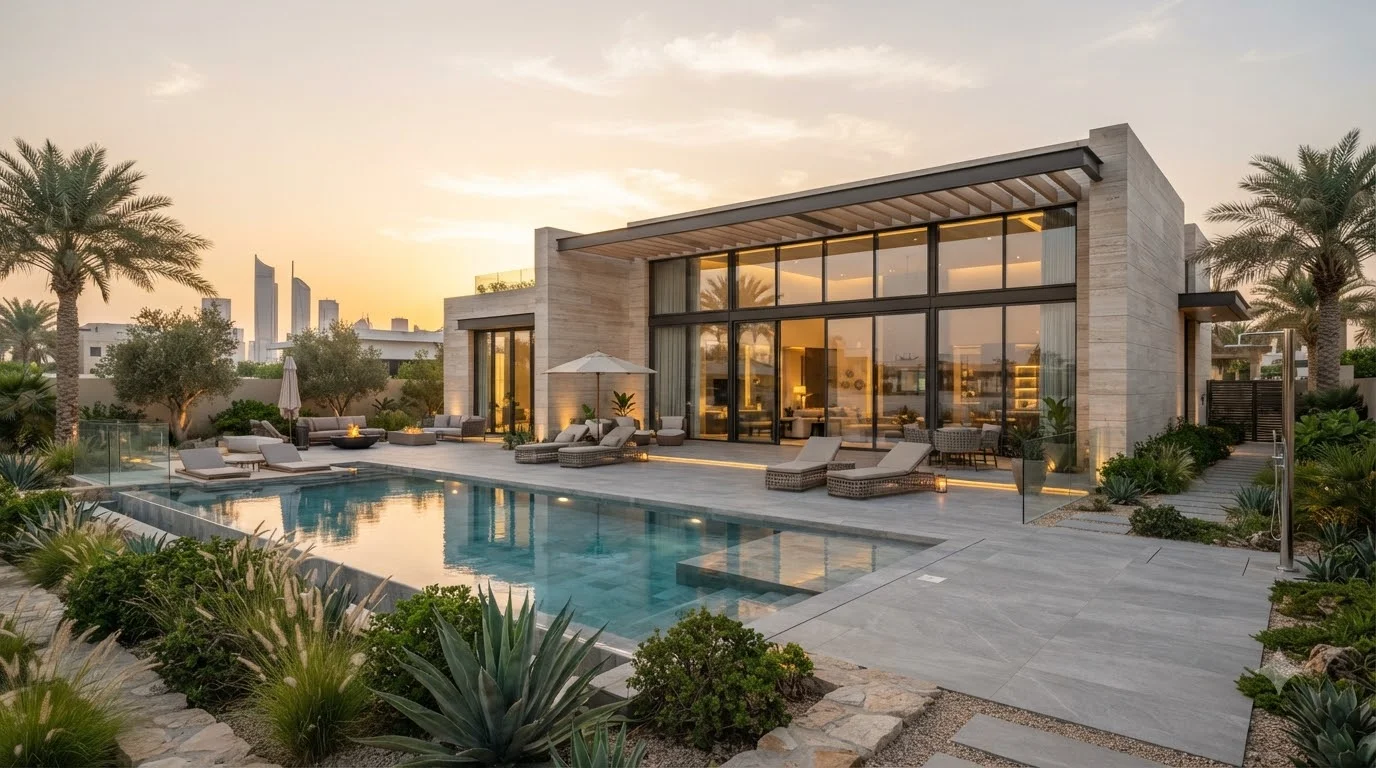
If you’ve ever walked barefoot across a poolside deck in Abu Dhabi at 2 PM in August, you already understand the real test every building material faces here. It isn’t rain, frost, or snow load. It’s relentless, dry, 45-degree heat combined with brutal UV exposure and, for months at a time, humidity that turns the air into soup. Most material catalogs are written for temperate climates, and half the promises on those glossy spec sheets simply don’t hold up once they meet the Gulf sun.
After years of building and renovating homes across the emirate, I’ve learned that the difference between a home that ages gracefully and one that starts cracking, fading, or warping within two summers almost always comes down to material selection at the very beginning of the project. This isn’t about buying the most expensive product on the market — it’s about buying the right product for this exact climate. Here’s what genuinely holds up, what doesn’t, and why it matters if you’re planning any serious build.
Why Abu Dhabi Is Uniquely Hard on Buildings
Before getting into materials, it helps to understand what they’re actually up against. Surface temperatures on exposed materials can exceed 70°C in direct sun. UV index levels sit at extreme for most of the year. Salt-laden coastal air accelerates corrosion on anything metal. And the swing between blistering daytime heat and cooler, humid nights creates constant expansion and contraction — the single biggest cause of cracking, delamination, and joint failure in this region.
Any contractor who tells you a material choice “should be fine” without factoring in these four stressors — heat, UV, salt, and thermal cycling — hasn’t tested it long enough. This is exactly the kind of detail that separates a builder who understands local conditions from one simply importing designs from cooler climates. It’s also why serious luxury villa construction UAE projects budget extra time upfront for material testing and supplier vetting rather than rushing straight to construction.
Exterior Walls and Cladding
Traditional painted concrete render is the most common exterior finish in the region, and it’s also one of the most disappointing over time. Standard acrylic paints chalk, fade, and hairline-crack within three to five years under this sun. If you want longevity, look at:
- GRC (Glass Reinforced Concrete) panels — lightweight, dimensionally stable, and excellent at resisting thermal movement without cracking.
- Natural stone cladding (limestone, sandstone, granite) — genuinely built for this climate, though proper sealing is essential to prevent staining from dust and pollution.
- High-performance elastomeric coatings rather than standard acrylic paint — these flex with thermal expansion instead of cracking.
Avoid cheap composite cladding panels with weak adhesive backing; the heat softens adhesives over time, and panels have been known to bow or detach entirely after a few summers.
Roofing and Waterproofing
Flat roofs are standard here, and waterproofing membranes take a beating from constant UV bombardment. Bitumen-based membranes without proper UV-resistant top coats degrade fast. The materials that consistently perform:
- APP-modified bitumen membranes with reflective mineral finishes
- TPO (Thermoplastic Polyolefin) membranes — increasingly popular because they reflect heat rather than absorb it, reducing roof surface temperatures significantly
- Torch-applied waterproofing with a protective screed layer on top, since bare membranes exposed directly to sun degrade far faster than protected ones
I’ve seen roofs redone twice within a decade because someone chose the cheapest waterproofing option available. It’s one of the worst places to cut corners.
Windows, Glazing, and Insulation
Standard single-glazed aluminum windows are essentially useless here from an efficiency standpoint — they let in enormous solar heat gain and drive up cooling costs dramatically. What actually works:
- Double-glazed low-E (low-emissivity) glass — reduces solar heat gain while still allowing natural light
- Thermally broken aluminum frames — the thermal break prevents heat transfer through the frame itself, which standard aluminum frames conduct straight into the interior
- Proper insulation behind cladding and in roof assemblies — often overlooked, but insulation quality affects both comfort and long-term AC costs more than almost any other single decision
Any luxury general contractor worth hiring will push back hard against single-glazed or thermally weak window systems, even if a client is trying to save on upfront costs, because the long-term energy bills and comfort issues far outweigh the initial savings.
Flooring and Outdoor Surfaces
Pool decks, terraces, and outdoor walkways need materials that won’t become unbearably hot to walk on and won’t fade or crack under UV. Porcelain pavers have become the clear favorite among experienced builders because they’re dense, low-porosity, UV-stable, and available in light colors that reflect rather than absorb heat. Natural stone works too, but darker stones like black granite can reach scorching surface temperatures and are best reserved for shaded areas.
Avoid: unsealed natural travertine in full sun exposure (it stains and pits over time), and low-grade composite decking, which softens and warps in extreme heat.
Metal Fixtures, Railings, and Fittings
Coastal salt air is brutal on standard steel and even some grades of stainless steel. For anything outdoors — railings, gates, pergolas — marine-grade 316 stainless steel or powder-coated aluminum are the only reliable long-term choices. Standard 304 stainless steel, often substituted to cut costs, will show pitting and rust streaks within a couple of years near the coast.
Landscaping Materials
Even hardscaping choices matter more than people expect. Light-colored concrete pavers and gravel reduce heat island effect around a property, while dark asphalt-style surfaces in driveways can become genuinely dangerous to touch in peak summer. Irrigation piping should be UV-stabilized PVC or HDPE, since standard piping left exposed becomes brittle and cracks within a season or two.
Why This Matters for Long-Term Value
Every one of these choices compounds over a building’s lifetime. A home built with climate-appropriate materials needs less maintenance, holds its resale value better, and delivers a noticeably more comfortable interior year-round. This is especially true in high-end residential work, where finishes are visible, tactile, and central to the overall experience of the home. In fact, most reputable luxury villa design in Abu Dhabi projects now treat material specification as a design decision in its own right, not just a technical afterthought handled by the procurement team.
The honest truth is that climate-smart material selection often costs more upfront — sometimes 10 to 20 percent more than standard alternatives. But when you calculate the cost of re-painting facades every three years, replacing warped decking, or repairing waterproofing failures, the premium materials almost always win on lifetime cost.
Final Thoughts
Abu Dhabi’s climate doesn’t forgive shortcuts. Materials that work beautifully in Europe or even in milder Gulf climates can fail spectacularly here within a few summers. The contractors and homeowners who get the best long-term results are the ones who ask hard questions about UV resistance, thermal cycling, and salt exposure before a single brick is laid — not after cracks start appearing.
If you’re planning a build or renovation, insist on climate-tested specifications, request material data sheets, and don’t be afraid to ask your contractor directly how a proposed material has performed on other projects in this exact environment. It’s a conversation worth having early, because in a climate this demanding, “good enough” rarely stays good for long. Whether you’re pursuing large-scale luxury villa construction UAE developments or a single bespoke family home, the right material decisions made today are what keep the building performing beautifully a decade from now.
Frequently Asked Question
1. Why do standard building materials fail faster in Abu Dhabi?
Extreme heat, intense UV exposure, salt air, and constant thermal cycling break down materials much quicker than in temperate climates.
2. What's the best exterior cladding for Abu Dhabi villas?
GRC panels and natural stone cladding hold up best against cracking, fading, and thermal movement.
3. Is single-glazed glass suitable for Abu Dhabi homes?
No, double-glazed low-E glass with thermally broken frames performs far better for heat and energy efficiency.
4. Which roofing material lasts longest in this climate?
TPO membranes or APP-modified bitumen with reflective coatings offer the best long-term waterproofing performance.
5. Why is 316 stainless steel preferred over 304 near the coast?
316 stainless steel resists salt-induced corrosion much better than standard 304 grade.
6. Do climate-smart materials really cost more upfront?
Yes, typically 10–20% more, but they save significantly on long-term repairs and maintenance.