

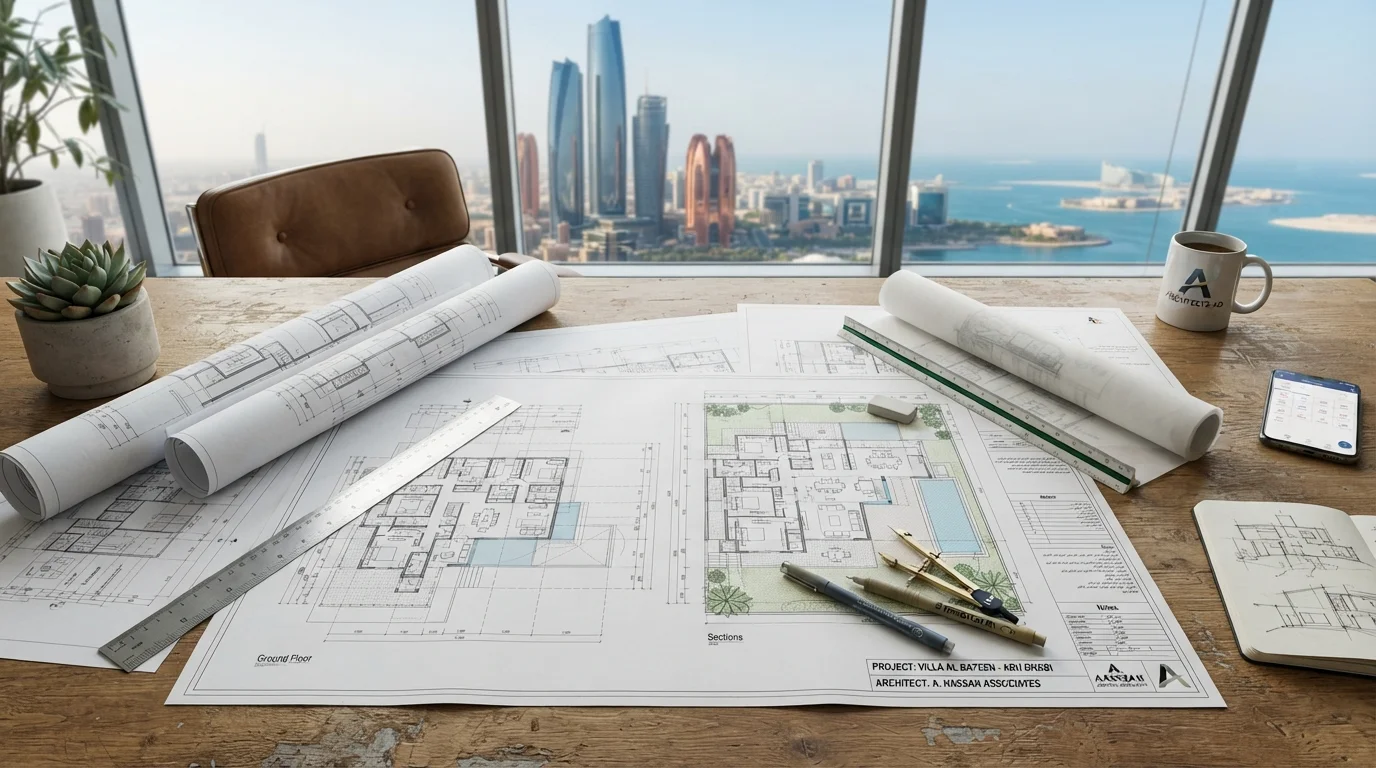
Building a villa in Abu Dhabi is one of the most rewarding — and most regulated — property investments you can make in the emirate. Between Estidama sustainability requirements, the Abu Dhabi International Building Code, and a multi-stage municipal approval process, first-time builders often underestimate how much planning happens before the first foundation is poured. This guide walks through the entire journey, from land and permits to costs and timelines, so you know what to expect at every stage.
1. Understand the Regulatory Framework First
It’s a good idea to understand the authorities involved in Abu Dhabi before you start designing a floor plan. Knowing who’s in charge of what can make a big difference in your project.
- Department of Municipalities and Transport (DMT): The DMT provides a unified digital platform serving as a single window for all permit applications and approvals across the emirate.
- Abu Dhabi International Building Code (ADIBC): This code is based on International Code Council standards but adapted for local conditions.
- Estidama Pearl Rating System: Abu Dhabi maintains this system as a mandatory sustainability framework, enforcing environmental benchmarks during permit issuance for all new buildings.
Knowing about these three important parts from the start can save you money and time in the long run. This is especially true for Estidama compliance, which affects how your building is laid out, the materials you use, and your mechanical, electrical, and plumbing systems, right from the beginning.
2. Assemble Your Professional Team
Villa construction in Abu Dhabi cannot legally proceed without licensed professionals attached to the project.
- You have to get a licensed engineering consultant to make and submit the plans, and a licensed contractor to do the actual work. This is a must.
- Engineering consultants and contractors in Abu Dhabi must first hold a Classification License that permits them to work within a specific project sector, size, and purpose.
Getting the right team on board is crucial – it’s not just about ticking boxes. When you’ve got experienced and licensed professionals handling your project, you can expect a much smoother ride when it comes to getting your plans approved. Fewer revisions mean less hassle and less delay, which is a win-win for everyone involved.
3. The Permit and Approval Process
The path from application to construction start typically unfolds in stages:
- Design and drawing preparation — your consultant prepares architectural, structural, and MEP drawings compliant with ADIBC and Estidama.
- The first step is all about submission and review. This is where you send in your detailed architectural drawings. These drawings should include floor plans, elevations, and sections. A registered architect or engineer must prepare them, making sure they follow all the rules set by the local government.
- Revisions — expect at least one round of comments; addressing plot setbacks, sustainability scoring, and documentation gaps early reduces delays.
- Final documentation — final submission typically requires a copy of the title deed, a No Objection Certificate from relevant parties, and finalized submission drawings.
- Permit issuance — once cleared, construction services may legally begin.
- Inspections during construction — periodic checkpoints verify compliance at key milestones (foundation, structure, MEP).
- When a building is finished, the local government gives a special paper called a completion certificate to the construction company. This paper shows that the building was made following all the rules and laws. The construction company needs this paper before they can get utilities like water and electricity connected for good. It’s like a final check to make sure everything is okay before people can move in.
The whole process of getting approval can take anywhere from two to eight weeks for each step. But if you’re building a whole villa, including designing it, getting it approved, and actually constructing it, it usually takes a lot longer than that. Once construction starts, it can add a significant amount of time to the overall project.
4. Budgeting: What Villa Construction Actually Costs in Abu Dhabi
When it comes to building a villa, the first thing people want to know is how much it’s going to cost. And in Abu Dhabi, the prices can vary quite a bit depending on the level of specification you’re looking for.
|
Finish Level |
Cost per sq. ft. (AED) |
|
Standard |
700 – 900 |
|
Luxury |
1,000 – 1,400 |
|
Ultra-luxury |
1,500+ |
For a big house like a 5,000 sq. ft. villa that’s really fancy, the total cost to build it is usually around AED 5-7 million. But this price doesn’t include the cost of the land itself.
In Abu Dhabi, the average price for villas is around AED 12,700 per square meter in 2026. But prices can vary a lot depending on the neighborhood. For example, island communities like Saadiyat have prices that are more than double that amount. This shows that location plays a big role in determining the price of villas in Abu Dhabi.
What drives the cost up or down
- Location: Premium waterfront and island communities carry stricter design guidelines and higher expectations for finishes, which pushes costs up.
- Design complexity: Multiple floors, basements, and bespoke architectural features increase both engineering demands and price.
- Materials: Imported stone, custom joinery, and branded fittings can shift the per-square-foot cost dramatically compared to standard, locally sourced finishes.
- When you’re planning a construction project, don’t forget to factor in extra costs beyond the actual building work. You’ll need to budget for things like consultant fees, charges from the local government, and getting a No Objection Certificate (NOC) – these can add up to anywhere from AED 1,000 to over AED 50,000, depending on how big and complicated your project is.
It’s a good idea to add a little extra to your construction budget, just in case something unexpected comes up. A common rule of thumb is to add 10-15% to your original budget. This extra money can help cover any surprise costs that might pop up during the project.
5. Common Pitfalls to Avoid
- Skipping compliance checks on “minor” changes. Even internal layout adjustments can trigger municipal review if they touch structural elements or MEP systems.
- Underestimating Estidama requirements. Sustainability compliance isn’t optional — it shapes your design from day one and can’t be retrofitted cheaply.
- Choosing the cheapest contractor. Selecting the right contractor matters more than choosing the lowest bid — a professional team ensures compliance, transparency, and long-term durability.
- Underbudgeting for the full picture. Land, permits, consultant fees, landscaping, and interior fit-out are frequently excluded from headline “per square foot” figures — make sure your budget accounts for all of them, not just the shell construction.
Final Thoughts
Building a villa in Abu Dhabi can be a really rewarding experience, but you have to plan carefully before you start. You need to know all the rules and regulations, get a team that has all the right licenses, make a realistic budget that covers everything, and leave time for reviews and checks. If you do all this, you can avoid delays and extra costs that often surprise people who are building for the first time. With good preparation, the process might seem complicated, but it’s totally doable, and the end result is a beautiful home that will last, in one of the most exciting property markets in the region.
Frequently Asked Questions
1. How long does villa construction take in Abu Dhabi?
Most projects run 12–18 months from design to handover, depending on size, approvals, and design complexity. Permit approval itself typically takes 2–8 weeks per submission stage, but delays are common around revision cycles and public holidays.
2.Do I need a licensed contractor, or can I self-build?
A licensed engineering consultant must prepare and submit your designs, and a licensed contractor must execute the work. Self-building without licensed professionals is not permitted for villa construction in Abu Dhabi.
3.What’s the minimum budget to build a villa in Abu Dhabi?
Standard-specification construction starts around AED 700 per sq. ft. For a modest 3,000 sq. ft. villa, that puts baseline construction costs (excluding land) at roughly AED 2.1 million, before permits, fit-out, and contingency.
4.Is Estidama Pearl Rating compulsory for all villas?
Yes — Estidama is a mandatory sustainability framework for new buildings and is enforced during permit issuance, so it factors into design decisions from the start rather than being an optional add-on.
5.Can I make changes after the building permit is issued?
Design changes after permit issuance typically require a resubmission and additional review, which can add weeks to your timeline. It’s far more cost-effective to finalize your design before submission than to amend it mid-process.
6.What happens if I skip a required permit?
Unpermitted or non-compliant work can lead to stop-work orders, fines, and in serious cases mandatory demolition of the affected work — plus complications when you eventually try to sell or refinance the property. It’s never worth cutting corners on compliance.
7.Do I need separate approval for landscaping, pools, or boundary walls?
Often yes. Features like pools and boundary walls are commonly treated as distinct scope items requiring their own approvals, so it’s worth flagging these to your consultant at the design stage rather than as an afterthought.
8.Who issues the final completion certificate?
The relevant municipality issues the building completion certificate once construction is finished and a final inspection confirms compliance with applicable laws and regulations. This certificate is required before permanent utility connections are activated.