

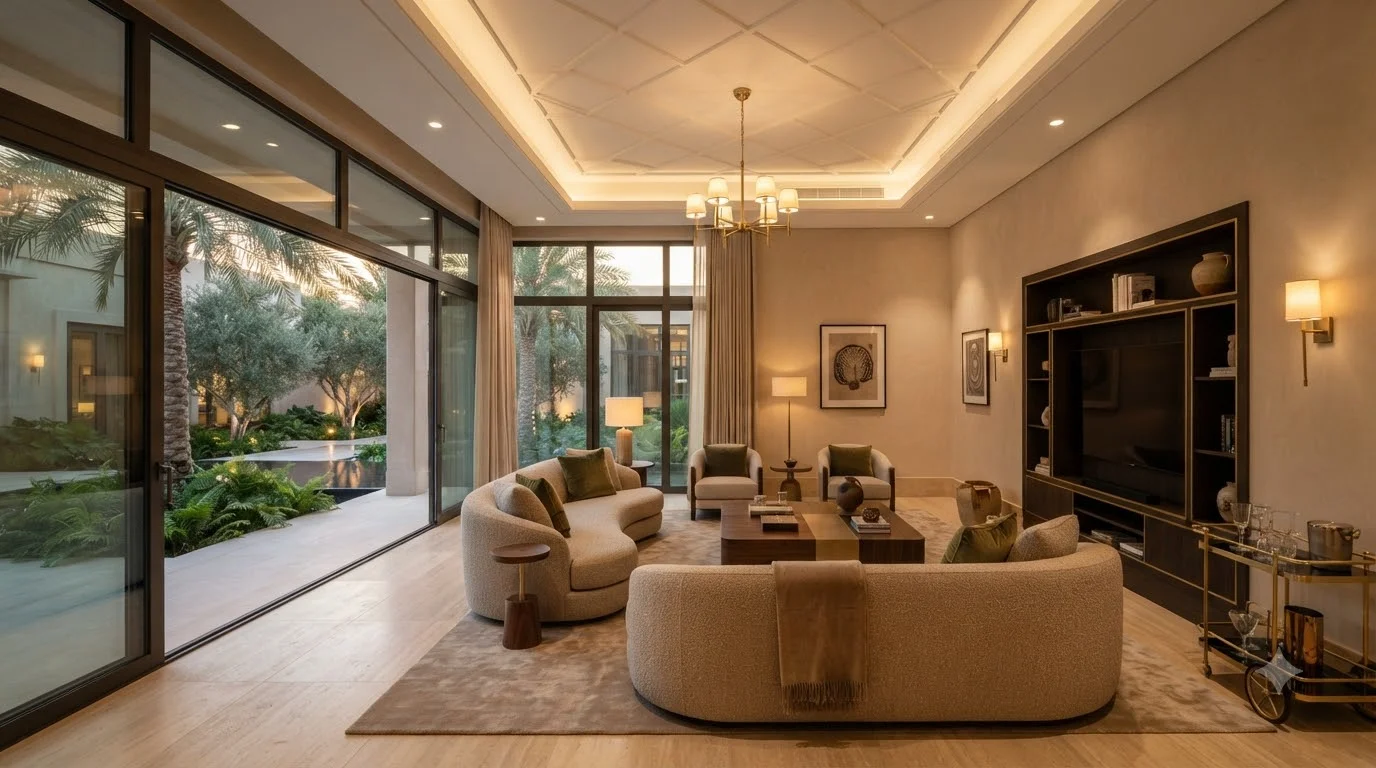
Abu Dhabi’s residential landscape continues to evolve at a remarkable pace, and 2026 is shaping up to be a defining year for high-end interior design. As homeowners seek spaces that reflect both global sophistication and Emirati heritage, villa interiors are moving toward a refined blend of comfort, technology, and timeless elegance. Whether you are planning a new build or considering a full renovation, understanding these emerging trends will help you make informed decisions for your home.
1. Warm Minimalism Replaces Stark Minimalism
For years, minimalism dominated luxury interiors with clean lines and neutral palettes. In 2026, this aesthetic is softening into what designers call “warm minimalism.” Instead of cold whites and greys, homeowners are choosing earthy tones such as terracotta, sand, olive, and warm taupe. Textured plaster walls, natural stone flooring, and handcrafted wooden furniture add depth without cluttering a space. The goal is a home that feels calm and uncluttered, yet inviting rather than sterile.
This shift is particularly relevant for villa owners undergoing a full property upgrade. A thoughtfully planned luxury villa fit out Abu Dhabi project can seamlessly incorporate warm minimalism through curated material palettes, custom joinery, and lighting that highlights texture rather than flattening it.
2. Biophilic Design and Indoor Greenery
With Abu Dhabi’s climate encouraging more time indoors during summer months, biophilic design has become a priority. This trend focuses on connecting interiors with nature through large glass walls, indoor gardens, living plant walls, and natural materials like rattan, linen, and unfinished wood. Courtyards and atriums are being redesigned with lush greenery, water features, and skylights that flood interiors with natural light while maintaining privacy and energy efficiency.
Villa owners are also incorporating smart irrigation systems for indoor plants, ensuring greenery thrives without demanding constant attention. This trend not only improves aesthetics but also supports wellbeing, reducing stress and improving air quality within the home.
3. Statement Ceilings and Architectural Details
Flat, plain ceilings are giving way to architectural statements in 2026. Coffered ceilings, hand-painted domes inspired by traditional Islamic geometric patterns, and layered lighting installations are becoming focal points in formal living areas, majlis rooms, and entryways. These details pay homage to regional design heritage while offering a sense of grandeur appropriate for luxury properties.
Custom ceiling work often requires specialized craftsmanship, which is one reason many homeowners partner with experienced teams from the start of their project. When planning luxury villa construction in Abu Dhabi, architects are now factoring in ceiling height and structural support early in the design phase specifically to accommodate these decorative elements later on.
4. Smart Home Integration as Standard, Not Luxury Add-On
Technology continues to reshape how villas function. In 2026, integrated smart systems are expected rather than optional. Climate control, lighting scenes, security, entertainment, and even window shading can now be managed through centralized apps or voice commands. What sets luxury apart is not simply having smart technology, but having it invisibly integrated into the architecture — hidden speakers, recessed sensors, and app-controlled blinds that operate without visible wiring or clunky panels.
Home automation is also extending to wellness features, such as circadian lighting that adjusts color temperature throughout the day to support natural sleep cycles, and air purification systems that respond automatically to outdoor air quality readings.
5. Multi-Generational and Flexible Living Spaces
Abu Dhabi villas are increasingly designed to accommodate extended families and multi-generational living. This has led to a rise in flexible floor plans featuring separate wings, private majlis areas, and adaptable rooms that can shift from home offices to guest suites as needed. Sliding partitions, pocket doors, and modular furniture allow spaces to be reconfigured without major renovation.
Designers are also paying closer attention to acoustic privacy between wings, using insulated walls and strategic room placement so that family gatherings and quiet personal time can coexist comfortably under one roof.
6. Natural Stone and Artisanal Craftsmanship
Marble, travertine, and onyx remain staples of luxury interiors, but 2026 sees a move toward more artisanal applications. Book-matched marble slabs, hand-carved stone accents, and mosaic detailing inspired by regional patterns are replacing uniform, mass-produced finishes. Homeowners are increasingly requesting one-of-a-kind pieces, from custom stone dining tables to sculptural staircases that serve as the centerpiece of the home.
This renewed appreciation for craftsmanship extends to furniture as well, with bespoke pieces from regional artisans gaining popularity over imported mass-market options. The result is a home that feels distinctly personal rather than replicated from a showroom catalog.
7. Sustainable and Energy-Efficient Materials
Sustainability is no longer a niche consideration; it is central to how luxury homes are designed and built. Villa owners are requesting energy-efficient glazing, solar-ready roofing, and materials with lower environmental impact, such as reclaimed wood and recycled stone composites. Insulation standards are also improving to reduce cooling costs in Abu Dhabi’s hot climate, which is a significant factor in long-term home maintenance expenses.
This focus on sustainability is reshaping conversations around luxury house construction, as clients now expect energy performance to be considered alongside aesthetics from the earliest design stages. Builders and designers are responding by offering more transparent material sourcing and energy modeling as part of the planning process.
8. Statement Kitchens as Social Hubs
The kitchen has evolved from a purely functional space into a social and design centerpiece. Open-plan kitchens with oversized islands, integrated seating, and high-end appliances hidden behind custom cabinetry are in high demand. Natural stone countertops, brass or matte black fixtures, and warm wood tones are replacing the all-white kitchens of previous years.
Many villa owners are also incorporating secondary “working kitchens” behind the main show kitchen, allowing the visible space to remain pristine for entertaining while daily cooking happens out of sight.
9. Layered, Mood-Based Lighting
Lighting design in 2026 goes far beyond overhead fixtures. Layered lighting — combining ambient, task, and accent lighting — allows homeowners to shift the mood of a room throughout the day. Sculptural pendant lights, hidden LED strips along ceiling coves, and dimmable systems controlled via smart apps are now standard requests in luxury villa projects. This approach not only enhances aesthetics but also improves functionality, allowing spaces to transition from bright and functional during the day to warm and intimate in the evening.
10. Personalized Wellness Spaces
Home wellness has become a defining feature of luxury living. Private spas, steam rooms, meditation corners, and dedicated fitness studios are increasingly common in villa designs. These spaces are often finished with calming materials such as natural stone, soft lighting, and views of private gardens or pools, creating a retreat-like atmosphere within the home itself.
Final Thoughts
The interior design trends shaping Abu Dhabi villas in 2026 reflect a broader shift toward homes that are personal, sustainable, and technologically seamless, while still honoring craftsmanship and regional character. Whether you are focused on a single room refresh or a complete redesign, working with experienced professionals ensures that these trends are implemented thoughtfully and in a way that suits your lifestyle and long-term needs. From material selection to structural planning, every decision made today will shape how your home feels and functions for years to come.
Frequently Asked Question
1.What's the difference between a designer and a decorator?
Decorators style existing spaces; designers can also change layouts and work with contractors.
2. What does the design process look like?
Consultation → measurements → concept boards → design development → sourcing → installation.
3.How long does a project take?
4–8 weeks for a single room; several months for full renovations.
4. Do you mark up furniture and materials?
Some designers do; it’s disclosed in the contract.
5. Can you manage contractors for renovations?
Yes, project management is part of full-service packages.
6. Do you offer virtual/online design services?
Yes, e-design packages are available remotely.