
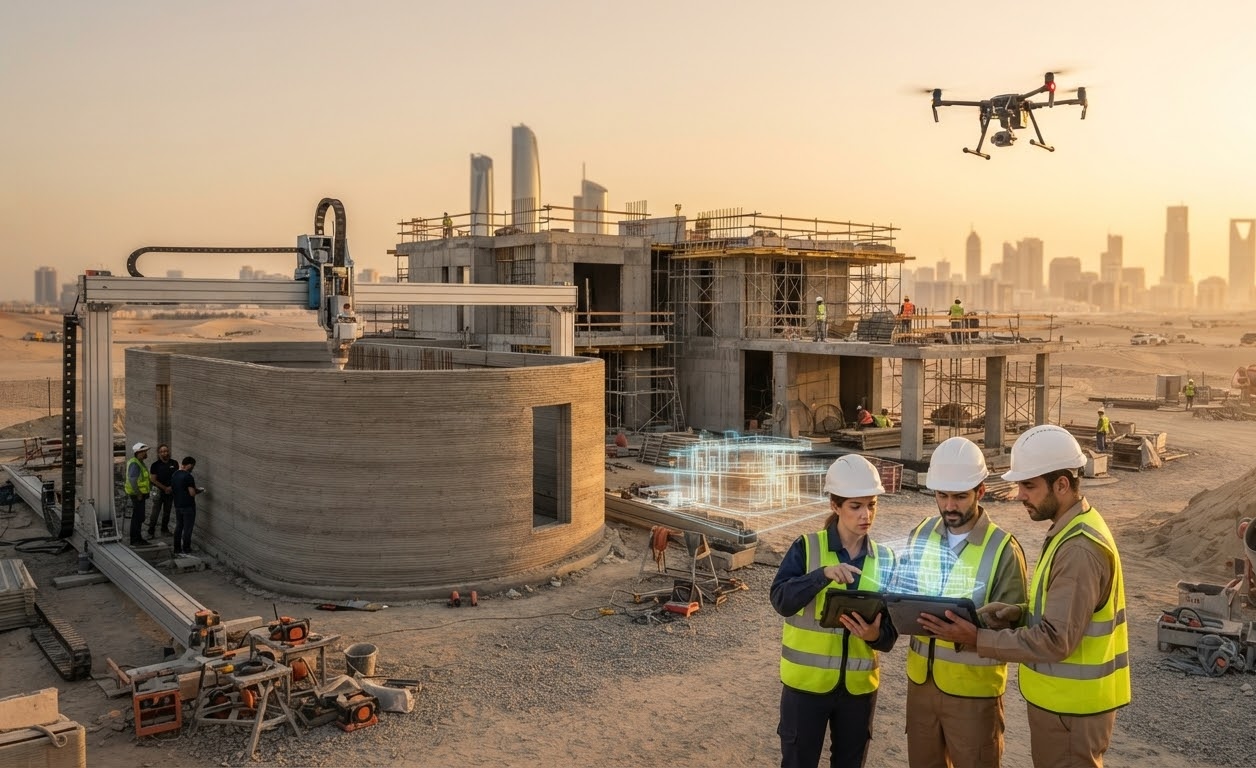
The construction industry is changing faster than at any point in its history. Rising material costs, tighter sustainability targets, and growing demand for faster delivery are pushing builders to rethink old methods. In the UAE, where ambitious architecture meets a demanding climate, the shift is especially visible. Whether you are a homeowner, an investor, or a developer, understanding these changes helps you make smarter decisions. Modern construction services Abu Dhabi clients can access today look very different from those of even five years ago.
Here are ten innovations reshaping how we build in 2026.
1. Modular and Prefabricated Construction
Off-site manufacturing is now a mainstream method. Wall panels, floor cassettes, and even full room modules are built in controlled factory conditions, then transported and assembled on site. This reduces weather delays, improves quality control, and cuts project timelines by up to 30–50% in some cases.
For anyone planning to build villa Abu Dhabi residents will admire, prefabrication offers precision and consistency that traditional site-built methods struggle to match. Waste is also reduced because materials are cut to exact specifications.
2. 3D-Printed Structures
Once a novelty, 3D printing has matured into a practical building tool. Large-scale printers extrude specialized concrete mixes layer by layer, producing walls, façade elements, and decorative features with remarkable speed. The UAE has been a global pioneer here, with Dubai setting ambitious targets for 3D-printed buildings.
The benefits go beyond speed. Printed structures allow curved, organic geometries that would be costly with conventional formwork, and they generate far less material waste.
3. Building Information Modeling (BIM) and Digital Twins
BIM has evolved from a design tool into a full lifecycle platform. Architects, engineers, and contractors now work inside a shared 3D model that contains every pipe, beam, and cable. Clashes are detected before a single brick is laid, saving time and costly rework.
Digital twins go a step further. A virtual replica of the finished building is linked to real-time sensor data, helping owners monitor performance and plan maintenance. A forward-thinking villa contractor will use BIM to give clients clear visibility into design, cost, and schedule from day one.
4. Artificial Intelligence in Project Management
AI is quietly transforming how projects are planned and run. Machine learning tools analyze historical project data to predict delays, flag budget risks, and optimize resource allocation. Some platforms scan site photos to track progress automatically and identify safety hazards.
The result is fewer surprises. Project managers can make decisions based on data rather than instinct, which keeps timelines realistic and costs under control.
5. Low-Carbon and Recycled Building Materials
Concrete and steel are among the largest sources of construction-related emissions, so the industry is searching for alternatives. In 2026, low-carbon concrete, recycled aggregates, and supplementary cementitious materials such as fly ash and slag are becoming standard specifications on many projects.
Engineered timber, bio-based insulation, and recycled steel are also gaining ground. These materials help projects meet green building standards like Estidama in Abu Dhabi while lowering the environmental footprint of the finished property.
6. Drones and Site Robotics
Drones have become routine on modern job sites. They survey land, create accurate topographic maps, inspect roofs and façades, and capture progress footage in a fraction of the time manual methods require. Robotics is following close behind, with machines now handling bricklaying, rebar tying, drilling, and layout marking.
These tools improve safety by taking people out of hazardous tasks, and they improve accuracy by removing human fatigue from repetitive work.
7. Smart Home Integration from the Blueprint Stage
Smart technology is no longer an afterthought added after handover. Lighting, climate control, security, curtains, and entertainment systems are now designed into the building’s infrastructure from the start. Cabling, sensors, and control hubs are planned alongside electrical and HVAC layouts.
This early integration produces cleaner results, fewer visible wires, and systems that work together seamlessly. Homeowners can control everything from a single app, and energy use can be monitored and optimized automatically.
8. Energy-Efficient Building Envelopes
In a climate like the UAE’s, how a building handles heat matters enormously. Advanced insulation, high-performance glazing, reflective roofing, and shading systems dramatically reduce cooling loads. Photovoltaic panels and battery storage are increasingly built into the design rather than bolted on later.
These upgrades lower electricity bills over the long term and improve indoor comfort. As energy regulations tighten, efficient envelopes are shifting from a premium feature to a baseline expectation.
9. Augmented and Virtual Reality for Design Approval
Reviewing flat drawings is a poor way to understand a space. AR and VR now let clients walk through their future home before construction begins, exploring layouts, ceiling heights, finishes, and lighting in realistic detail.
Changes made at this stage cost almost nothing compared to changes made during construction. Clients gain confidence, and design teams get faster, clearer feedback.
10. Advanced Interior Fit-Out Technology
Interiors are where much of a home’s personality and value is created, and technology is changing this phase too. Digital measurement tools, CNC machining for joinery, and factory-finished cabinetry and wall cladding bring higher precision and shorter installation times. Material visualization software helps homeowners compare stone, timber, and fabric options in realistic settings before committing.
When planning villa interior fit out in Abu Dhabi, these technologies allow tighter coordination between design, procurement, and installation. The outcome is a smoother process, consistent quality, and fewer on-site compromises.
What These Innovations Mean for Homeowners
Individually, each of these technologies offers a clear advantage. Together, they signal a broader shift toward construction that is faster, cleaner, more transparent, and more predictable. For homeowners, the practical benefits include:
- Better cost control through accurate modeling and early clash detection
- Shorter timelines thanks to prefabrication and AI-driven scheduling
- Higher quality from factory-controlled production and digital precision
- Lower running costs through efficient envelopes and smart systems
- Greater sustainability through responsible materials and reduced waste
Of course, technology alone does not guarantee a great result. Experience, workmanship, and clear communication remain just as important as any software or machine. The best outcomes come when skilled professionals use these tools thoughtfully rather than for novelty.
Choosing the Right Partner in 2026
With so many new methods available, choosing the right team matters more than ever. Look for a firm that can explain how it uses technology, shows a track record of completed projects, and offers transparent pricing and scheduling. Ask about their approach to sustainability, quality control, and after-handover support.
Strong construction services Abu Dhabi providers combine technical capability with local knowledge of regulations, climate, and design preferences. That blend ensures your project complies with municipal requirements while still reflecting your lifestyle.
If you are ready to build villa Abu Dhabi families will enjoy for decades, start by discussing your goals with an experienced villa contractor who embraces innovation without losing sight of craftsmanship. Ask to see past work, speak to previous clients, and request a detailed breakdown of how technology will be used on your project, from design through to villa interior fit out in Abu Dhabi.
Final Thoughts
The construction industry in 2026 is defined by smarter planning, cleaner materials, and more intelligent building methods. From 3D printing and prefabrication to AI, BIM, and smart-home integration, these innovations are redefining what is possible and raising expectations for quality, speed, and sustainability.
For homeowners and investors, the message is encouraging. You no longer have to choose between speed and quality, or between luxury and efficiency. With the right team and the right tools, you can have all of them.
Frequently Asked Question
1.What are the biggest construction innovations in 2026?
Key innovations include prefabrication, 3D printing, BIM, AI project management, and low-carbon materials. Smart home integration, drones, and AR/VR design tools are also reshaping how we build.
2. Does prefabricated construction reduce project timelines?
Yes, components are made off-site while groundwork continues, cutting timelines by 30-50% in some cases. Factory conditions also improve quality and reduce weather delays.
3.How can I build a villa in Abu Dhabi using modern construction methods?
Choose an experienced villa contractor who uses BIM, prefabrication, and smart-home planning. Discuss your budget, design goals, and timeline, and ask how each technology will be applied.
4.Do these innovations make building more expensive?
Not necessarily, as upfront costs are often offset by less waste and faster completion. Lower energy bills and fewer errors add savings over time.
5. Can smart home systems be added after construction?
Yes, but integrating them at the design stage gives a cleaner finish and better performance. Early planning avoids visible wires and costly retrofitting.
6. What should I look for when choosing construction services in Abu Dhabi?
Look for a proven track record, local regulatory knowledge, and transparent pricing and scheduling. Client references and after-handover support are also strong signs of reliability.
